
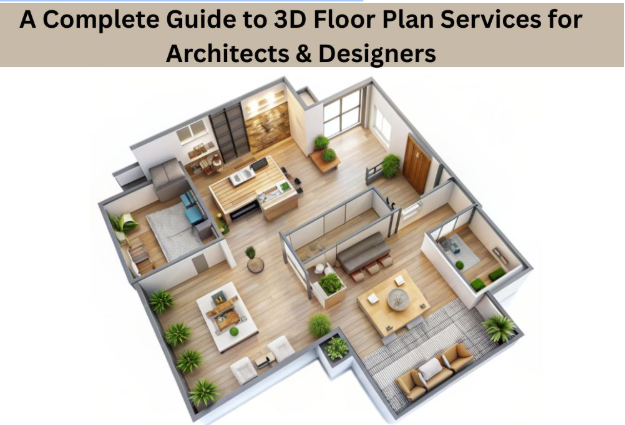
Architects and designers make extensive use of effective visual communication in order to represent their design intentions, functionality of layouts, and space relationships. Standard 2D floor plans, however, have presented challenges in designing communication with clients, project stakeholders, or construction companies. The need to represent such information effectively has given 3D floor plan services a prominent role in contemporary architectural designs.
When created with a professional 3D architectural visualization service, such images provide a level of clarity and accuracy that is unmatched. They assist architects in improving approval processes, making presentations, preventing misunderstandings, and improving the design experience in other ways. In this article, you will learn all there is to know about incorporating 3D floor plans in your designs.
What are 3D Floor Plan Services?
3D floor plan solutions include designing two-dimensional images with a third dimension added. Such images can highlight rooms, architectural designs, furniture, textures, and materials in an artistic manner.
They assist in comprehending:
- How a room is laid out
- Furniture Placement
- Circulation & Flow
- Color schemes & designs
- Room functionality and scale
As opposed to 2D designs, where symbols and technical notation are used, in 3D designs, one can have an immediate intuitive understanding of space.
Why Architects and Designers Use 3D Floor Plans
3D floor plans improve the design process by allowing for understanding and better communication among all parties in a project.
Important pros include:
- Speedier approvals by clients
- Enhanced communication with stakeholders
- Reduced design misunderstandings
- Enhancement of final space imaging
- Better Presentations and Marketing Materials
Such advantages make 3D plans invaluable in both domestic and commercial construction.
3. Process of 3D Floor Plans Creation
A professional 3D architectural visualization company operates in an orderly manner in order to achieve accuracy and consistency.
Common steps include:
- Receiving CAD files or sketches
- Modeling Architectural Layout in 3D
- Adding furniture, textures, materials, and decorations
- Using Light and Shadow Effects
- Creation of Final Top View Graphic
- Revisions Based On Feedback
The effect is a refined and realistic graphic image that conveys both design considerations and aesthetic decisions.
4. Types of 3D Floor Plans That Architects Can Use
Depending on the project, architects can pick among a variety of 3D floor plans, such as:
Furnished 3D Floor Plans
Features rooms with furnishings and decorations, which help clients visualize a completed space.
Unfurnished 3D Floor Plans
Secondly, it is ideal for construction sites because it can provide all the necessary information without any distractions.
Textured and Colored Plans
Emphasize materials, floors, finishes, and design schemes in projects focused on interiors.
3D Isometric Plans
Give a dynamic and angled perspective for presentation and brochure purposes.
Interactive 3D Floor Plans
Enable consumers to switch between layouts, materials, or furnishings.
Every type of font serves a different purpose based on whether it is used for accuracy of design, clarity in construction, or market appeal.
5. Major Advantages of Applying 3D Floor Plans to Architectural Design
Better Communication with Clients
Clients can find it very confusing to interpret technical drawings. 3D plans assist in bridging this gap.
Improved Design Validation
They can make better judgments of circulation, scale, and functional space.
Better Presentation Quality
Attractive 3D designs can greatly improve proposals for designs and pitch presentations.
Reduced Errors Before Construction
With early identification, architects can sidestep potentially expensive modifications down the road.
6. Integration of 3D Floor Plans with Other Visualization Services
3D floor plans are sometimes used in combination with other visualization capabilities offered by a 3D architectural visualization firm.
They may include:
- Interior & exterior 3D renderings
- Virtual walkthroughs
- Panoramas
- Flythrough Animations
- Architectural rendering photorealistic
Integrating these functions provides a more engaging and comprehensive design presentation.
7. Use Cases in Architectural and Design Works
The 3D Floor Plans are widely used in various projects and include:
- 3G
- High-rise
- Inter
- Housing – apartments and houses
- Working in a commercial office
- Retail spaces and showrooms
- Hospitality interiors
- Schools and healthcare institutions
- Mixed-use Developments
They offer insight at each stage, from idea generation through to delivering marketing materials.
8. Selecting a Suitable Partner for 3D Visualization
The quality of 3D floor plans is largely dependent upon expertise in 3D visualization. Real estate architects would therefore require a 3D architectural visualization firm with such strengths as:
- Practical experience in architectural modeling
- Exceptional interior design visualization abilities
- Rapid turnaround times
- Effective communication and revisions
- High-quality rendering output
An expert collaborator will make sure all graphic elements have a focus in line with the architectural vision.
Final Thoughts
3D Floor Plan Services have become an essential tool in the arsenal of architects and designers hoping to effectively share ideas, wow clients, and expedite decisions. Highly graphic, intuitive solutions make complicated designs seem simple, increase presentations, and eliminate potential misunderstandings in designs before they go from paper to paper.
With a trusted 3D architectural visualization agency, architects can showcase professional, accurate, and aesthetically appealing images, which will benefit the entire design process.